

Nicotine & Smoke Residue Cleaning Services
Professional nicotine, tar, and smoke residue cleaning for properties affected by long-term smoking, fire smoke exposure, and contaminated indoor environments.
Rapid Response Times
5 Star Rated Service
Licensed, Qualified & Insured
Professional Nicotine & Smoke Residue Cleaning & Decontamination
Nicotine and smoke contamination can significantly impact indoor environments, leaving behind sticky residue, strong odours, staining, and airborne pollutants that affect both surfaces and air quality.
Over time, tobacco smoke and fire-related smoke particles settle onto walls, ceilings, fixtures, and furnishings, penetrating porous materials and creating persistent contamination that cannot be removed with standard cleaning.
Ever Ready Solutions provides professional nicotine and smoke residue cleaning services across Brisbane, Logan, Ipswich, Redland Bay, Moreton Bay and the Gold Coast. We restore affected properties to a clean, safe, and habitable condition using controlled decontamination methods designed to remove residue at its source.
What Nicotine & Smoke Residue Cleaning Involves
Nicotine and smoke contamination is more than surface staining — it is a fine particulate and chemical residue that bonds to surfaces and penetrates materials.
Effective cleaning involves:
- Removal of sticky nicotine and tar residue from surfaces
- Decontamination of affected areas using specialised cleaning methods
- Treatment of odours embedded within materials
- Cleaning of high-contact and high-accumulation zones
- Assessment of materials that may require removal or replacement
Without proper remediation, residue can continue to bleed through surfaces, release odours, and affect indoor air quality.
When Nicotine & Smoke Cleaning Is Required
Nicotine and smoke residue cleaning is commonly required in properties affected by:
- Long-term indoor smoking
- End-of-lease or rental property turnover
- Pre-sale or property preparation
- Fire or smoke exposure (non-structural damage)
- Strong odours or visible staining on walls and ceilings
Even when a property appears clean, smoke residue often remains embedded in surfaces, continuing to impact odour and hygiene.
Property managers, landlords, real estate agencies, and homeowners rely on professional cleaning to fully restore properties and meet occupancy standards.
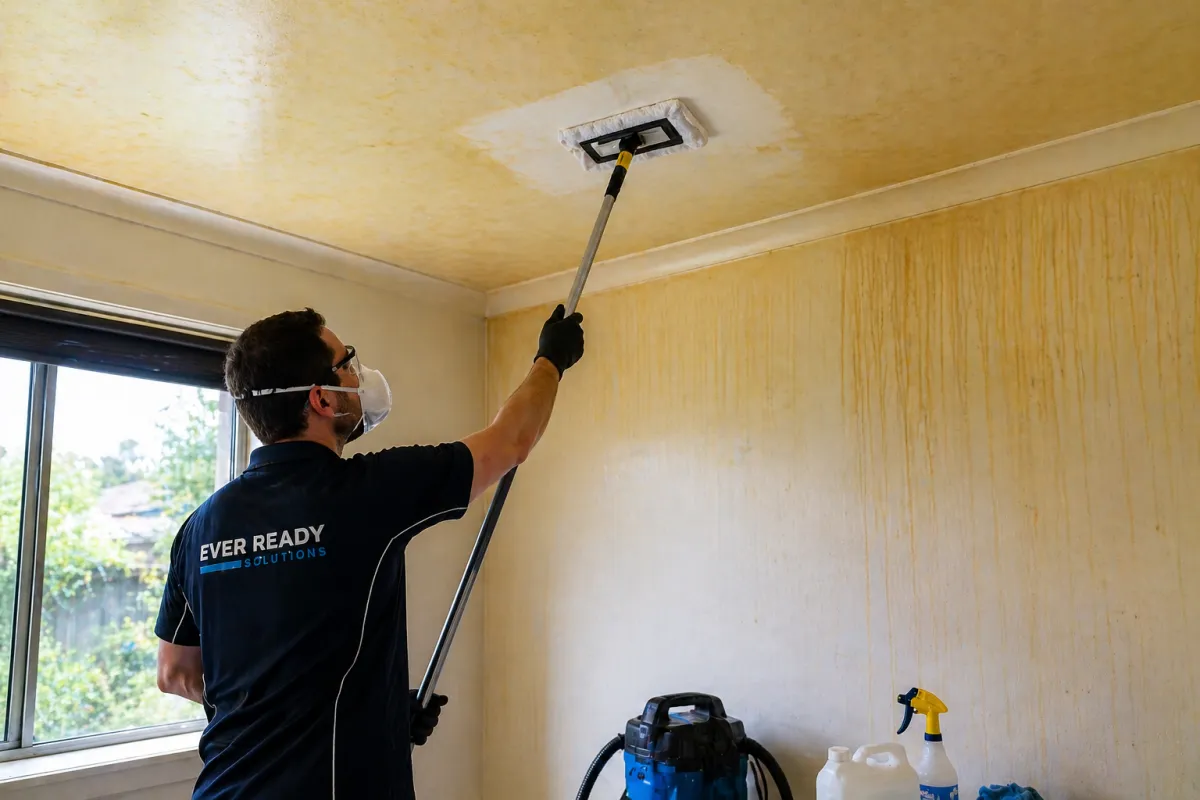
Nicotine & Smoke Residue Cleaning Services We Provide
Our nicotine and smoke cleaning service forms part of a broader contamination remediation approach.
Depending on the level of contamination, works may include:
- Full surface cleaning of walls, ceilings, and fixtures
- Removal of heavy residue from kitchens and living areas
- Odour treatment and air quality improvement
- Cleaning of cabinetry, doors, trims, and fittings
- Preparation of properties for repainting or restoration
Where required, we coordinate with painters, builders, or restoration professionals to ensure complete property recovery.
Our Nicotine & Smoke Residue Cleaning Process
Initial Site Assessment
We begin with a detailed inspection to assess the level of nicotine or smoke contamination, identify affected areas, and determine the appropriate cleaning approach.
This includes evaluating:
- Surface staining and residue buildup
- Odour intensity and spread
- Material condition and porosity
- Areas of high contamination concentration
Controlled Cleaning & Contamination Management
Nicotine and smoke residue is carefully removed using controlled cleaning methods designed to prevent smearing, spreading, or recontamination.
Specialised cleaning solutions are used to break down tar and residue without damaging underlying materials.
Detailed Surface Decontamination
All affected surfaces are thoroughly cleaned, including:
- Walls and ceilings
- Doors, trims, and cabinetry
- Light fittings and fixtures
- High-contact areas and hidden surfaces
This step ensures residue is removed from both visible and less accessible areas.
Odour Treatment & Air Quality Improvement
Smoke odours can remain embedded in materials even after cleaning.
We apply targeted odour control methods to:
- Neutralise smoke odours
- Improve indoor air quality
- Reduce airborne contamination
Material Assessment & Preparation for Restoration
Where residue has deeply penetrated materials, additional steps may be required.
We assess whether surfaces:
- Can be restored through cleaning
- Require sealing or repainting
- May need removal in severe cases
Final Review & Handover
Once cleaning is complete, the property is reviewed to ensure residue and odours have been effectively addressed.
Documentation or reports can be provided for real estate, property managers, or insurance purposes.
Why DIY Cleaning Often Fails
Nicotine and smoke residue is extremely difficult to remove without proper methods.
DIY cleaning can:
- Spread residue across surfaces
- Leave behind odour-causing particles
- Fail to remove embedded contamination
- Cause staining to reappear over time
Professional cleaning ensures residue is removed correctly and surfaces are properly restored.
Why Choose Ever Ready Solutions
Nicotine and smoke contamination requires more than general cleaning — it requires controlled removal and an understanding of how residue behaves across different materials.
At Ever Ready Solutions, we specialise in contamination cleaning and property remediation, allowing us to restore affected environments efficiently and safely.
We work with homeowners, property managers, real estate agencies, and commercial clients to deliver reliable results with clear communication and minimal disruption.
Service Areas
Nicotine and smoke residue cleaning services are available throughout Brisbane, Logan, Ipswich, Redland Bay, Moreton Bay, the Gold Coast and surrounding South East Queensland regions, servicing both residential and commercial properties with fast response and professional results.
Need Nicotine & Smoke Residue Cleaning?
If your property has been affected by smoking or smoke contamination, professional cleaning is essential to fully restore surfaces and remove odours.
Our team can assess the property and carry out safe, effective decontamination.
FAQ – Nicotine & Smoke Residue Cleaning
Can nicotine staining be completely removed?
In many cases, nicotine staining can be significantly reduced or fully removed through professional cleaning. However, heavily affected or porous surfaces may retain some discolouration and may require sealing or repainting to achieve a fully restored finish.
Will the smoke smell go away completely?
Smoke odours can usually be greatly reduced or eliminated with proper cleaning and odour treatment. The final result depends on how deeply the residue has penetrated materials such as walls, ceilings, and soft furnishings.
Is this the same as fire damage restoration?
No. Nicotine and smoke residue cleaning focuses on removing contamination and odours caused by smoking or light smoke exposure. Fire damage restoration involves structural damage, soot, and more extensive remediation processes.
How long does the process take?
The timeframe depends on the size of the property and the level of contamination. Smaller jobs may be completed within a day, while heavily affected properties may require multiple stages of cleaning and treatment.
Will nicotine stains come back after cleaning?
If surfaces are not properly cleaned or sealed, staining can sometimes reappear over time. Professional cleaning removes the majority of residue, but in severe cases, sealing and repainting may be recommended to prevent bleed-through.
Do I need this service for end-of-lease or property sale?
Yes. Nicotine and smoke contamination can impact property value, rental compliance, and inspection outcomes. Professional cleaning helps restore the property to a suitable condition for tenants, buyers, or real estate requirements.