









Fire Extinguisher Powder Cleanup – Dry Chemical Decontamination
Safe, professional fire extinguisher powder cleanup and decontamination services across Brisbane and South East Queensland.
Rapid Response Times
5 Star Rated Service
Licensed, Qualified & Insured
Fire extinguisher discharge can leave behind fine, corrosive powder that spreads rapidly through a property. While it may appear like simple dust, dry chemical residue can damage electronics, contaminate surfaces, and create ongoing air quality issues if not properly removed.
At Ever Ready Solutions, we provide controlled cleanup and decontamination of fire extinguisher powder using professional methods designed to safely remove residue, protect materials, and restore affected areas.
What Fire Extinguisher Powder Cleanup Involves
This is not standard cleaning.
Dry chemical residue requires a structured decontamination process that includes:
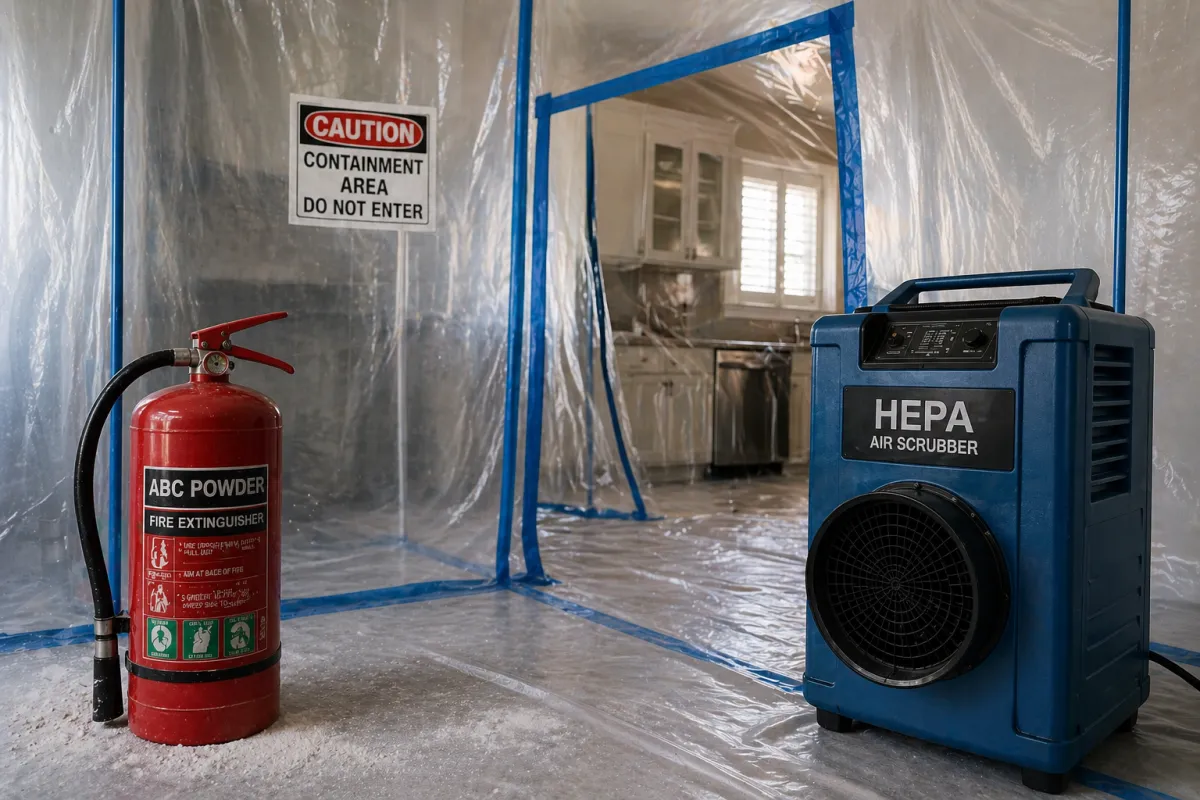
- Controlled containment of affected areas
- HEPA filtration to capture airborne particles
- Fine particulate removal from surfaces and materials
- Detailed cleaning of sensitive areas
- Safe disposal of contaminated materials
Without proper control, powder can easily be redistributed, worsening contamination.
Why Fire Extinguisher Powder Cleanup Is Critical
Dry chemical extinguishers (commonly ABC powder) release ultra-fine particles that become airborne and settle across all surfaces — including inside electrical equipment, ventilation systems, and structural cavities.
If not properly treated, this can lead to:
- Corrosion of metals and electronic components
- Residue buildup inside appliances and systems
- Airborne contamination and respiratory irritation
- Surface staining and long-term material damage
- Ongoing spread through airflow and movement
Fast, controlled cleanup is essential to prevent further contamination and costly damage.
Why DIY Cleanup Often Makes It Worse
Dry chemical powder is extremely fine and easily becomes airborne.
Attempting to clean without proper equipment can:
- Spread contamination to new areas
- Force powder deeper into materials and electronics
- Increase exposure risks
- Cause further damage during incorrect cleaning
Professional decontamination ensures the residue is removed safely and effectively.
Our Fire Extinguisher Powder Cleanup Process
Step 1: Assessment & Containment Setup
We assess the extent of powder discharge and identify affected zones, including hidden and high-risk areas.
Containment is established where required to prevent further spread into unaffected areas. This is especially important in occupied properties or sensitive environments.
Step 2: HEPA Filtration & Airborne Particle Control
High-efficiency air filtration systems are installed to capture airborne powder particles.
Dry chemical residue is extremely fine and easily disturbed, so controlling the air environment is critical before and during cleanup.
Step 3: HEPA Vacuuming & Dry Removal
All accessible surfaces are carefully HEPA vacuumed using specialised equipment.
This step removes loose powder without spreading contamination and is essential before any wet cleaning begins.
Step 4: Detailed Surface Cleaning & Neutralisation
After dry removal, affected surfaces are cleaned using controlled methods.
Special attention is given to:
- Electrical fixtures and sensitive equipment
- Hard surfaces and structural materials
- Areas where powder has settled into crevices
Cleaning methods are selected to remove residue without causing further damage.
Step 5: Equipment & High-Risk Area Cleaning
Where powder has entered sensitive areas such as electronics, HVAC systems, or confined spaces, targeted cleaning may be required.
This may involve coordination with specialist trades depending on the level of contamination.
Step 6: Final Clean, Verification & Decontamination
All treated areas are re-inspected to ensure residue has been effectively removed.
Additional cleaning or filtration may be applied if required to achieve a safe, clean environment.
Step 7: Reporting & Recommendations
We provide clear documentation outlining:
- Areas affected
- Work completed
- Recommendations for any further repair or replacement
This is suitable for insurance, commercial clients, and property managers.
Where This Service Is Commonly Required
Fire extinguisher discharge can occur in:
- Commercial kitchens and retail spaces
- Offices and warehouses
- Residential properties
- Plant rooms and service areas
- Schools and Classrooms
- Construction and industrial sites
Even a small discharge can affect large areas due to airborne spread.
Why Choose Ever Ready Solutions
Dry chemical residue can cause ongoing damage if not handled correctly. Choosing the right contractor is critical to ensuring contamination is properly removed and not spread further through the property.
Ever Ready Solutions provides specialist remediation and decontamination services backed by real-world experience in water damage, mould remediation, and hazardous material cleanup.
Our understanding of contamination behaviour allows us to approach each job with precision — controlling airflow, removing fine particles safely, and protecting sensitive materials.
We are not a general cleaning company. We specialise in restoration and contamination control.
Service Areas
We provide fire extinguisher powder cleanup across: Brisbane, Logan, Ipswich, Moreton Bay, Redland Bay, Gold Coast, Including all surrounding South East Queensland areas.
Need Fire Extinguisher Powder Cleanup?
If a fire extinguisher has been discharged in your property, immediate cleanup is essential to prevent further damage.
Our team can assess the situation, contain contamination, and carry out professional decontamination safely and efficiently.
FAQ – Fire Extinguisher Powder Cleanup
Is fire extinguisher powder dangerous?
While not always toxic, the fine particles can irritate the respiratory system and damage materials if not removed.
Can I clean it myself?
DIY cleaning often spreads the powder further and increases damage risk. Professional cleanup is recommended.
Will powder damage electronics?
Yes. Dry chemical residue can corrode and damage sensitive components if not removed quickly.
How quickly should cleanup be done?
As soon as possible. The longer residue remains, the greater the risk of corrosion and contamination.
Do you provide reports for insurance?
Yes. Documentation can be provided for insurance and commercial purposes.